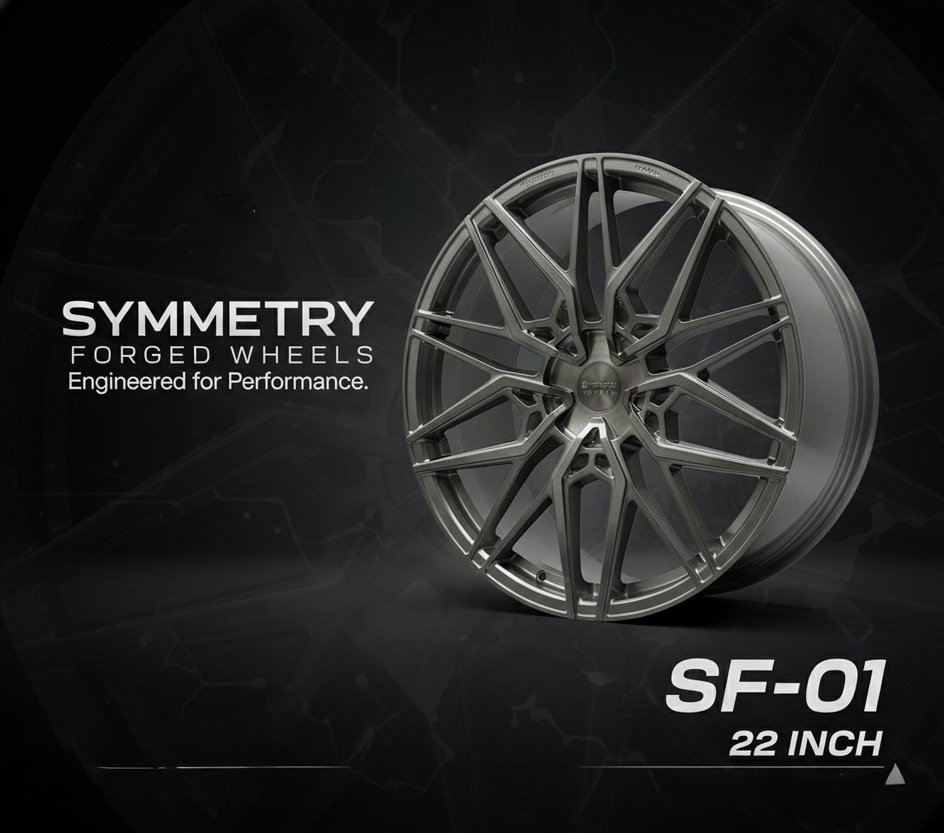
Symmetry Forged: Precision in Every Revolution
Elevate your drive with the perfect balance of form and function. At Symmetry Forged, we don’t just manufacture wheels; we engineer masterpieces of structural integrity and aesthetic perfection.
Technical Brochure & Process Guide
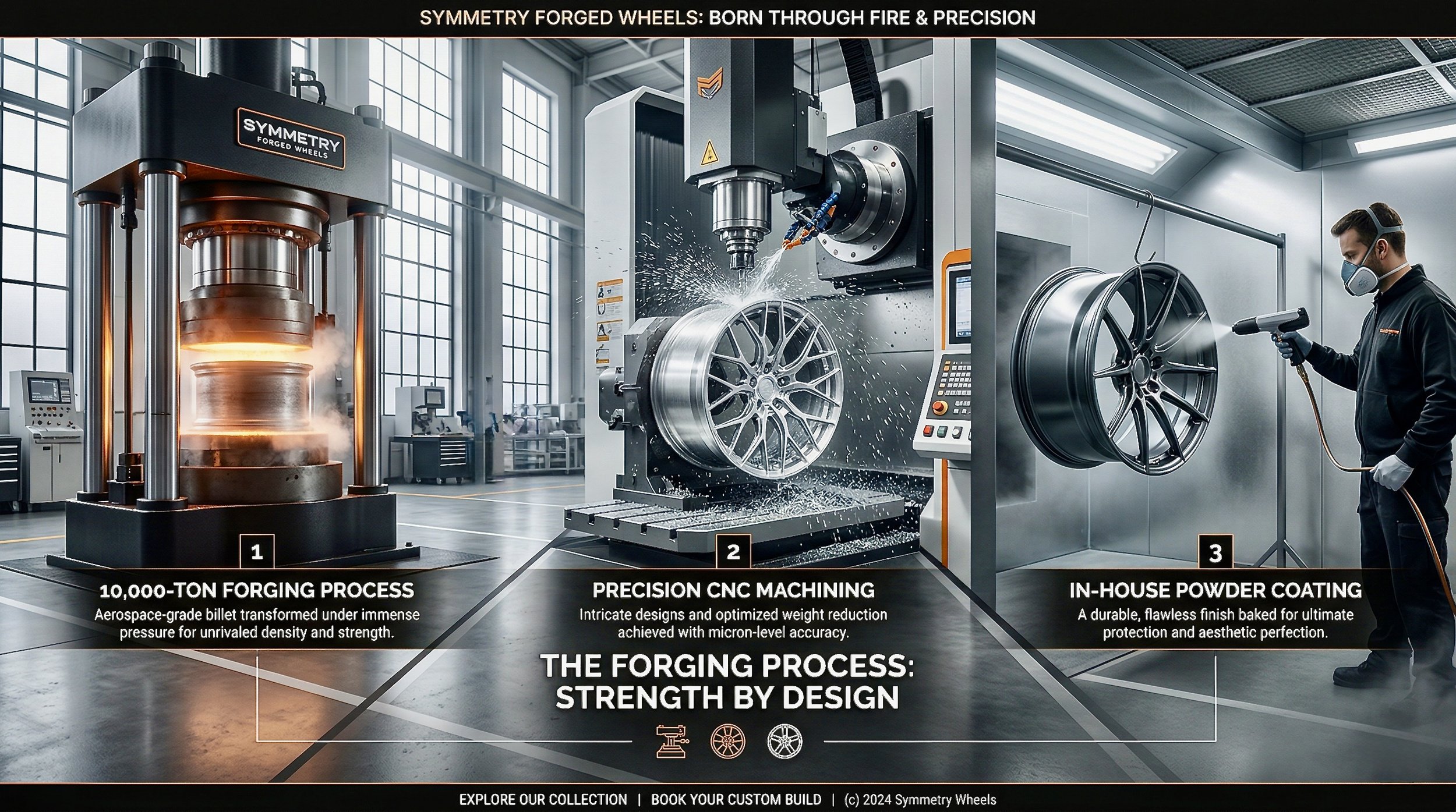
The Art of Precision: Inside the Symmetry Forged Process
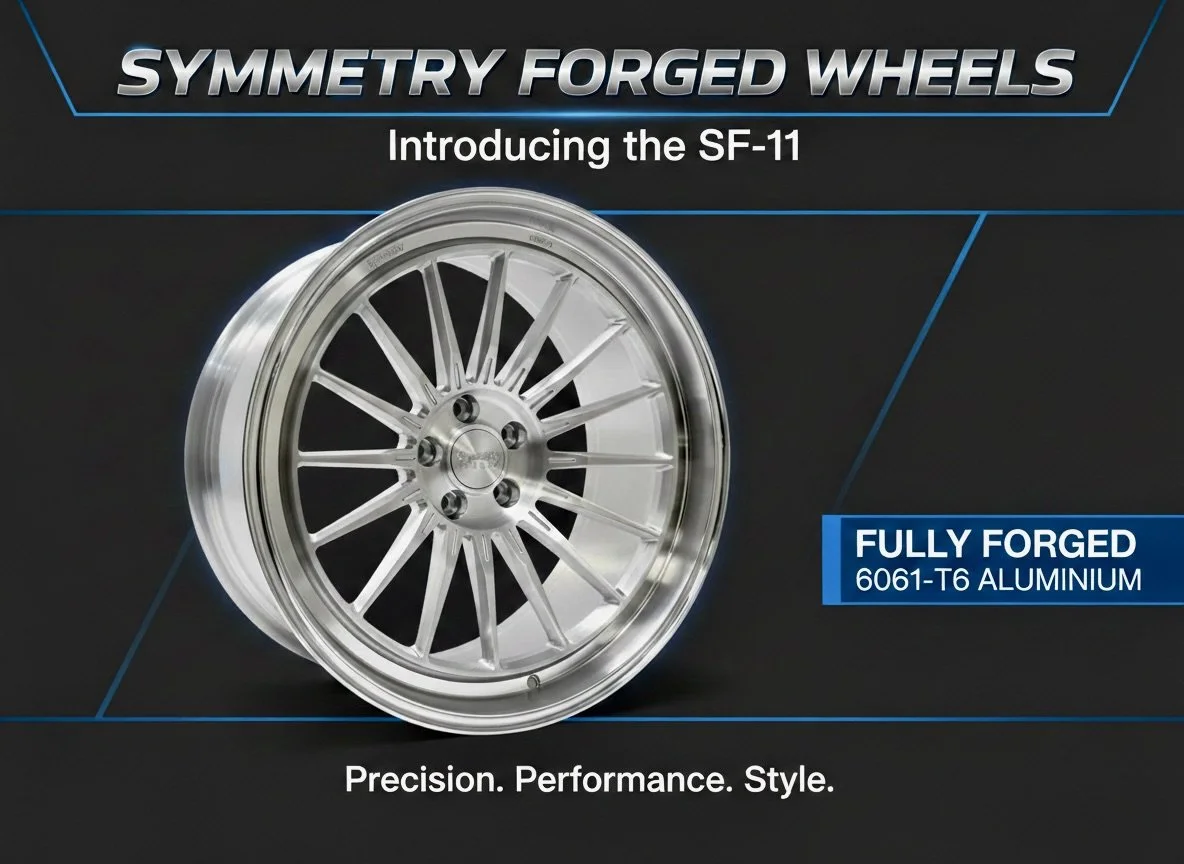
The forging of SYMMETRY WHEELS using a 10,000-ton (10k) press and 6061-T6 aluminum represents a high-precision manufacturing standard. This process leverages extreme hydraulic force to refine the internal grain structure of the alloy, significantly enhancing mechanical properties compared to traditional casting methods.
1. The 10k Forging Process
The "10k" refers to a 10,000-ton hydraulic press, which provides the necessary compressive force to deform 6061 aluminum into a near-net shape.
Billet Preparation: The process begins with a 6061 aluminum billet, typically heated to a plastic state to facilitate flow.
Multi-Stage Deformation: Forging often occurs in two main stages:
Initial Forging (Upsetting): The cylindrical billet is compressed to increase its diameter and refine the grain structure.
Final Impression Forging: The preform is placed into a final die where the 10,000-ton force extrudes the material into the complex geometry of the wheel rim and disc.
Flash Management: Excess material is forced into a "flash" gutter, which is later trimmed. This ensures the die is completely filled and the wheel reaches its full density.
2. Material: 6061-T6 Aluminum
6061-T6 is preferred for forged wheels due to its excellent strength-to-weight ratio and corrosion resistance. The "T6" temper denotes that the material has been solution heat-treated and artificially aged.
PropertyTypical Value (6061-T6)Yield Strength~240–275 MPaTensile Strength~310 MPaModulus of Elasticity68.9 GPa (10,000 ksi)Fatigue Limit~233 MPa (Forged) vs ~149 MPa (Non-forged)
Forging 6061-T6 not only increases the ultimate tensile strength but also drastically reduces the scatter in fatigue life, making the wheels more reliable under cyclic loading.
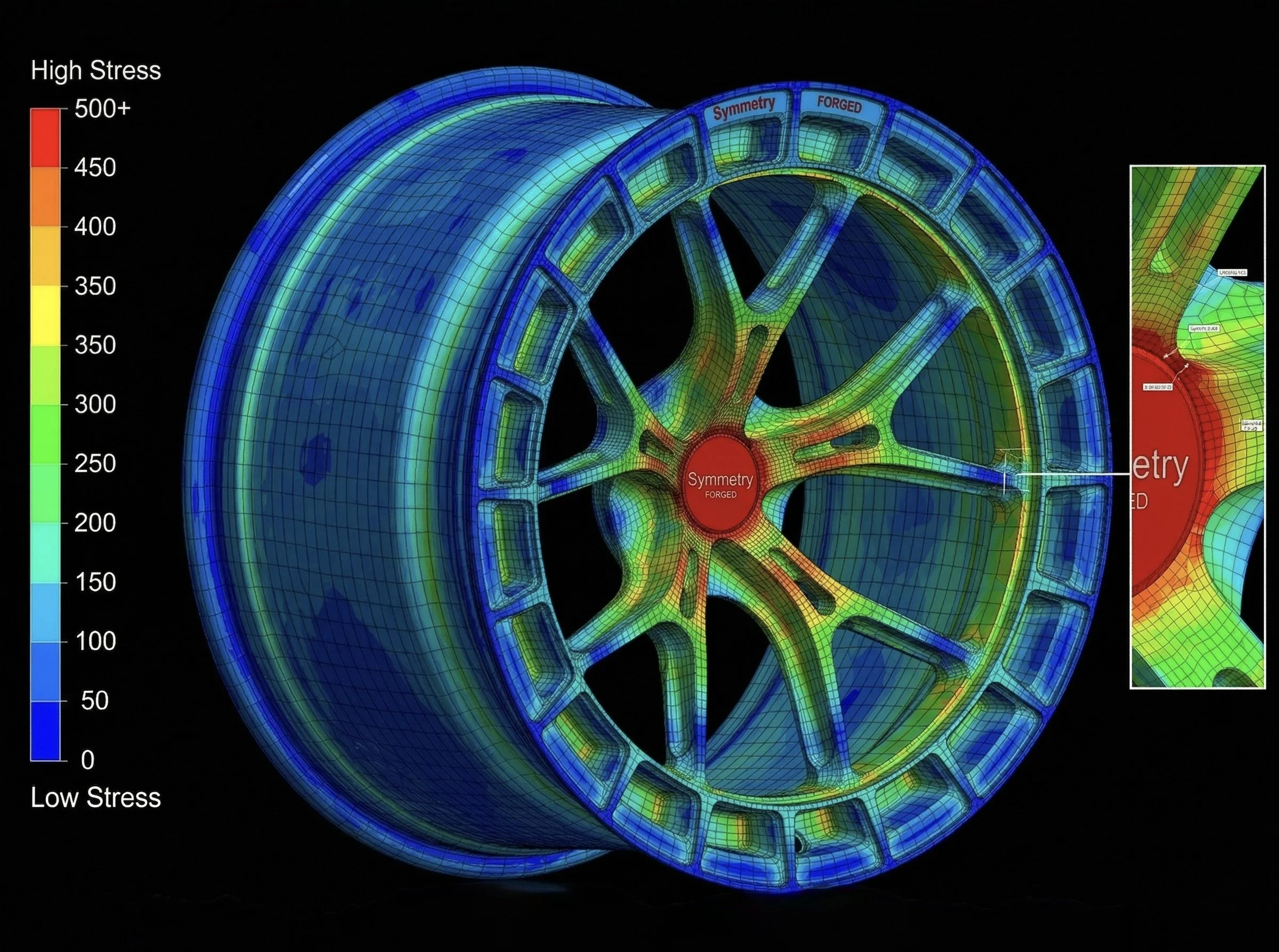
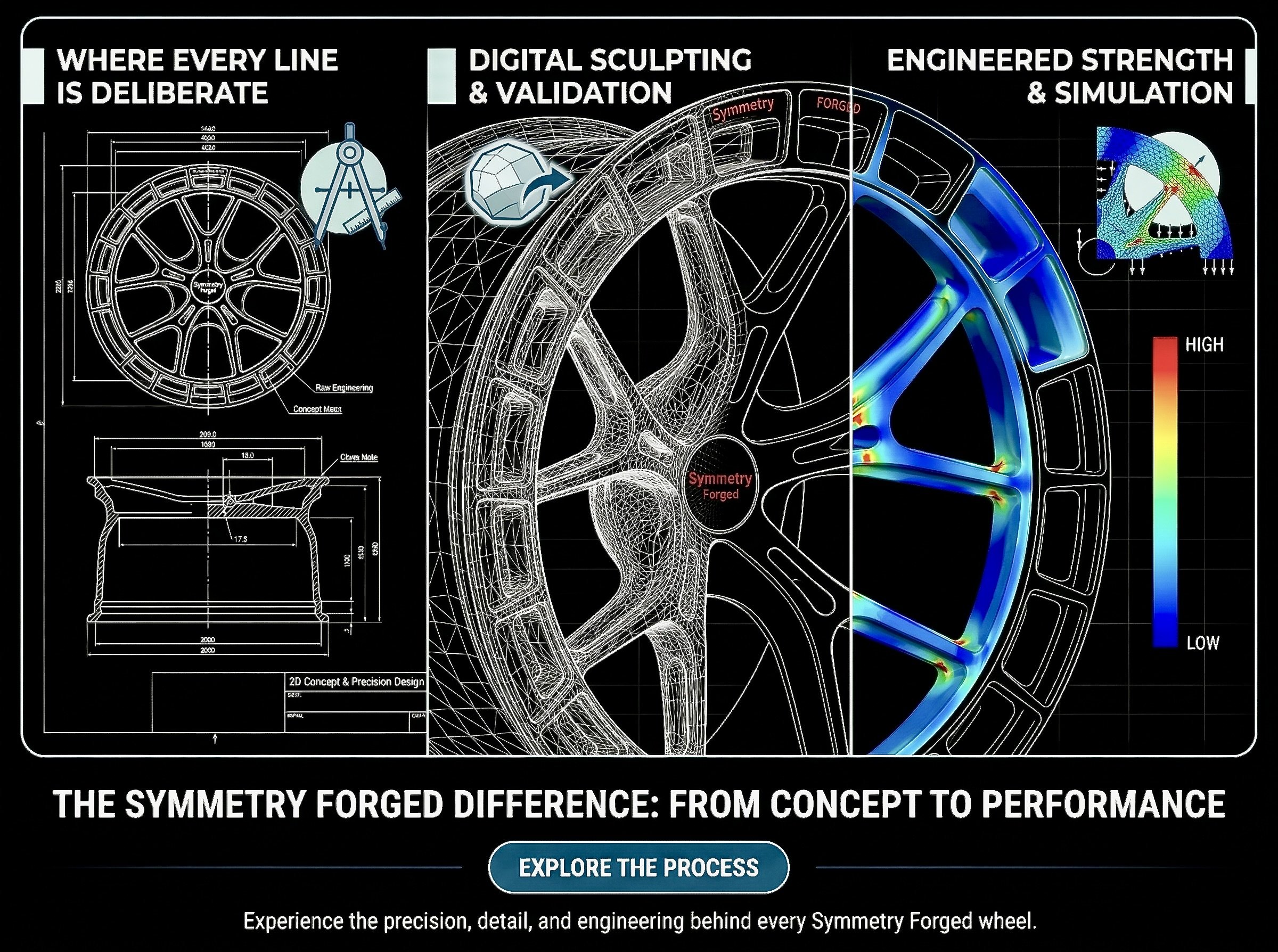
3. Finite Element Analysis (FEA)
FEA is a critical tool for optimizing the forging process and validating the final wheel design before physical production.
Process Simulation: Software like DEFORM-3D is used to model the thermo-mechanical flow of the aluminum during the forging stages. This helps predict load-stroke curves, temperature distribution, and potential defects like "overlapping" or cracking.
Structural Validation: Post-manufacturing FEA (often using ANSYS or ABAQUS) simulates real-world conditions such as:
Radial Fatigue Tests: Simulating the constant weight of the vehicle.
Cornering Tests: Analyzing the lateral stresses on the wheel spokes and hub.
Impact Tests: Modeling 13° or 90° impacts to ensure the wheel deforms plastically rather than fracturing.